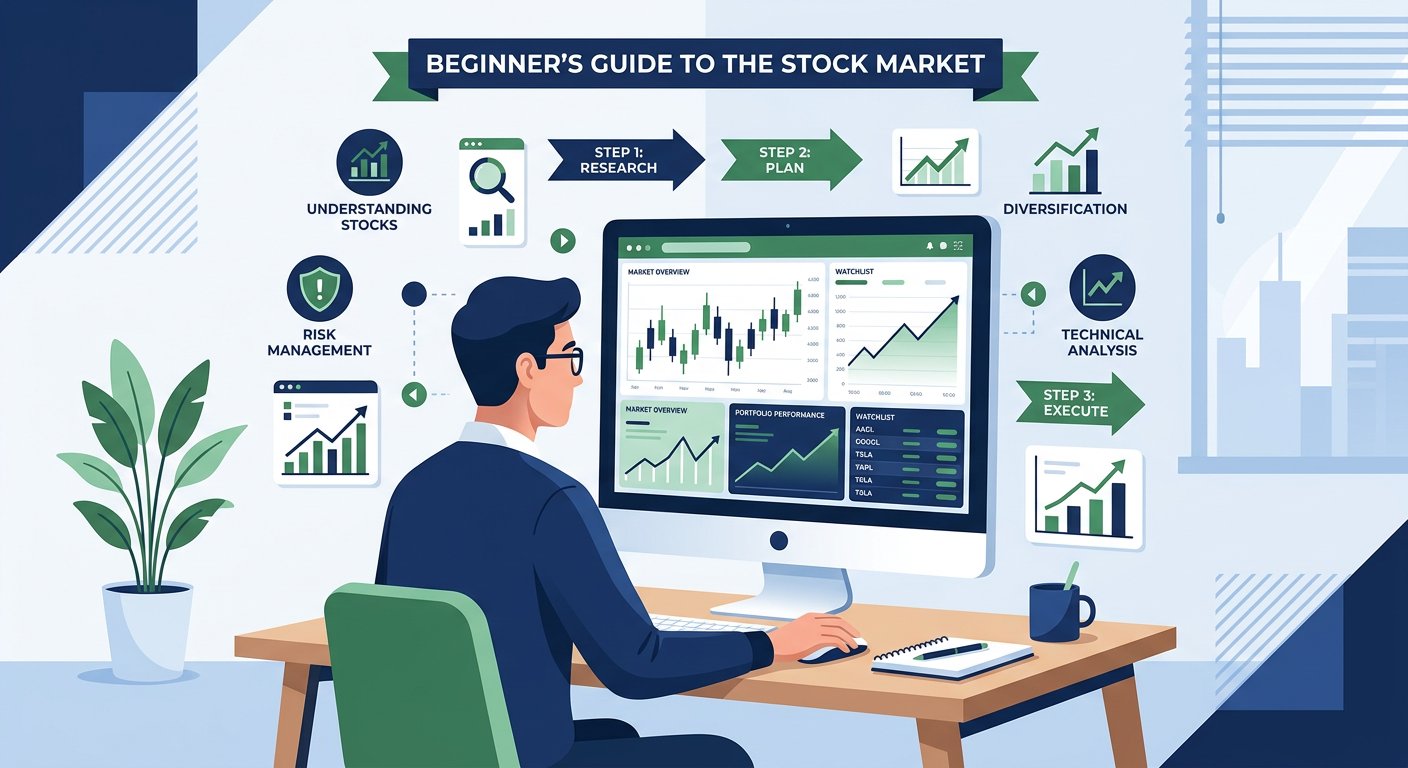
If you have ever felt that the stock market is only for the rich, the experts, or the lucky few, this guide is for you. The truth is, anyone can learn to invest — and understanding the basics is the first and most important step. In this beginner's guide, I'll explain what the stock market really is, how it works, and how you can start your journey with confidence.
What Is the Stock Market?
The stock market is a place where shares of publicly listed companies are bought and sold. When you buy a share (also called a stock), you are buying a small piece of ownership in that company. If the company grows and becomes more valuable over time, your share usually becomes more valuable too.
In India, the two main stock exchanges are the National Stock Exchange (NSE) and the Bombay Stock Exchange (BSE). These exchanges are like organised marketplaces where buyers and sellers meet — though today everything happens electronically through your phone or computer.
Why Do Companies Sell Shares?
Companies need money to grow — to build factories, hire people, launch products, or expand to new cities. Instead of only borrowing from banks, they can raise money by selling ownership to the public. In return, investors like you get a chance to share in the company's future profits and growth.
How Do You Make Money From Stocks?
There are two main ways investors earn returns from the stock market:
- Capital appreciation: This happens when the price of your shares rises above what you paid. For example, if you buy a share at ₹100 and it grows to ₹150, you have made ₹50 of profit (on paper) per share.
- Dividends: Some companies share a part of their profits with shareholders in the form of regular payments called dividends. It's like getting a small reward just for holding the stock.
Important Stock Market Terms for Beginners
Here are some basic terms you'll come across often:
| Term | Simple Meaning |
|---|---|
| Share / Stock | A small unit of ownership in a company |
| Demat Account | An account that holds your shares in electronic form |
| Broker | A platform or company that lets you buy and sell shares |
| Sensex / Nifty | Indexes that track the overall market's performance |
| Portfolio | The collection of all your investments |
| Bull Market | A period when prices are generally rising |
| Bear Market | A period when prices are generally falling |
How to Start Investing in the Stock Market
Getting started is simpler than most people think. Here is a step-by-step overview:
- Open a Demat and Trading account: Choose a trusted, SEBI-registered broker. You'll need your PAN card, Aadhaar, and a bank account.
- Learn the basics first: Don't rush. Spend time understanding how companies and markets work before investing real money.
- Start small: You don't need lakhs to begin. You can start with a small amount and increase gradually as you learn.
- Think long-term: The best results usually come from staying invested for many years, not days or weeks.
- Diversify: Don't put all your money into a single stock. Spreading your investments reduces risk.
Understanding Risk
Every investment carries some risk, and the stock market is no exception. Prices go up and down — sometimes sharply. This is completely normal. The key is to never invest money you might need urgently in the short term, and to avoid making emotional decisions when the market drops.
Historically, despite many ups and downs, the Indian stock market has rewarded long-term, disciplined investors well. But past performance is never a guarantee of future results, which is why education and patience matter so much.
Common Beginner Questions
How much money do I need to start?
You can start with as little as a few hundred rupees, especially through mutual funds or SIPs. There is no need to wait until you have a large amount.
Is investing the same as trading?
No. Investing means buying quality assets and holding them for the long term. Trading means buying and selling frequently to profit from short-term price movements. Trading is much riskier and is not recommended for beginners.
Can I lose all my money?
If you invest in a single risky stock, large losses are possible. But if you invest in a diversified way and for the long term, the risk of losing everything is greatly reduced.
Final Thoughts
The stock market is one of the most powerful tools available for building long-term wealth — but only when approached with knowledge, patience and discipline. As a beginner, your goal should not be to get rich overnight. Instead, focus on learning, starting small, and staying consistent.
In my upcoming articles, I'll cover topics like SIPs, mutual funds, and the power of compounding in detail. Keep reading, keep learning, and you'll be well on your way to becoming a confident, informed investor.