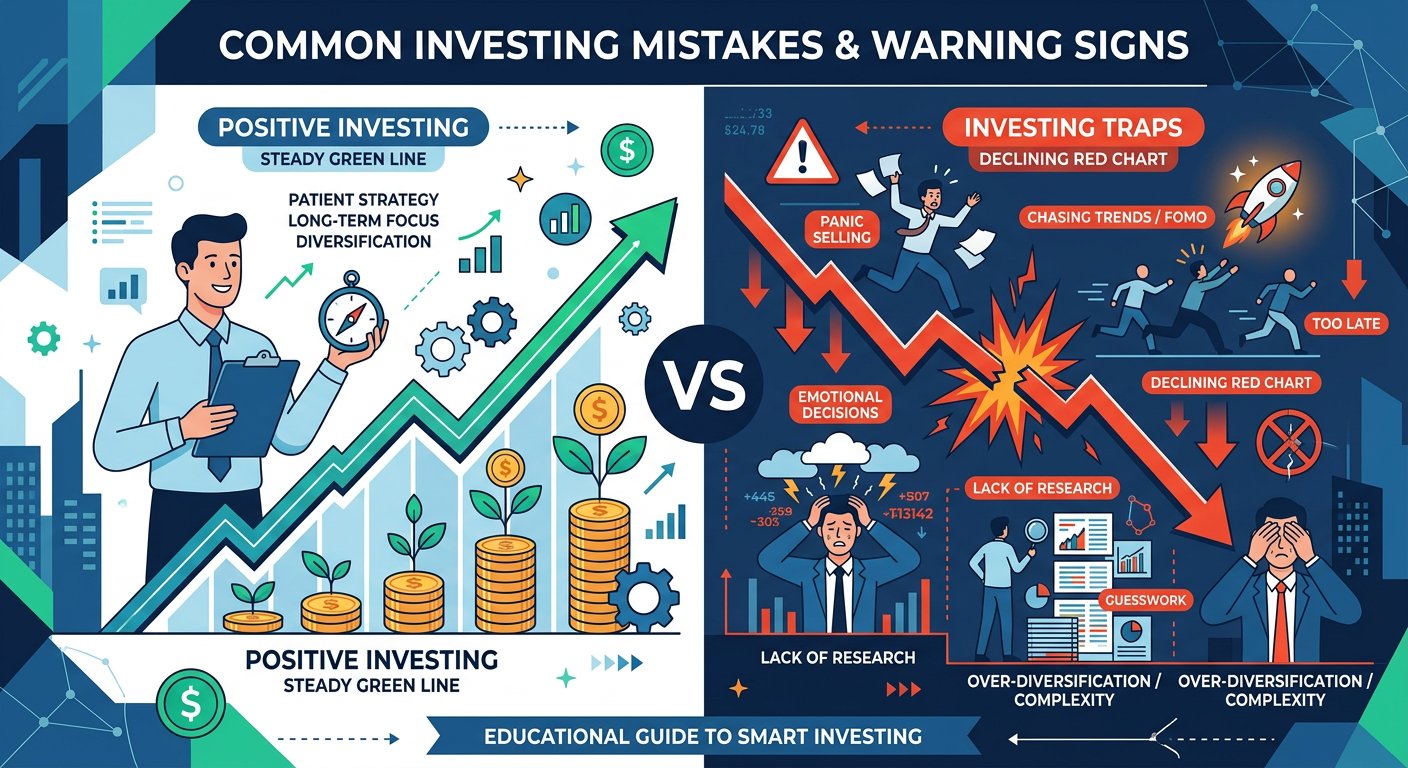
Everyone makes mistakes when they start investing — I certainly did. But the good news is that you can learn from others' errors instead of paying for them yourself. Here are seven of the most common investing mistakes beginners make, and how you can avoid them.
1. Trying to Get Rich Quickly
The biggest mistake of all is treating investing like gambling. Chasing quick profits or "hot tips" usually leads to losses. Real wealth is built slowly, through patience and consistency over many years. Accept this early, and you'll already be ahead of most beginners.
2. Not Doing Your Own Research
Many beginners buy stocks just because a friend, YouTuber, or WhatsApp group recommended them. Never invest in something you don't understand. Take time to learn about a company or fund before putting your money into it.
3. Investing Without an Emergency Fund
If you invest all your savings and then face an unexpected expense, you may be forced to sell at a loss. Always keep an emergency fund (3–6 months of expenses) in a safe, accessible place before investing.
4. Letting Emotions Drive Decisions
Fear and greed are an investor's worst enemies. Many beginners panic and sell when markets fall, then buy back when prices are high out of excitement — the exact opposite of what they should do. Stay calm and stick to your plan.
5. Not Diversifying
Putting all your money into a single stock is risky. If that company struggles, your entire investment suffers. Spreading your money across different companies, sectors, or funds reduces this risk significantly.
6. Ignoring Fees and Costs
High brokerage charges, fund expense ratios, and frequent trading costs can quietly eat into your returns over time. Always be aware of what you're paying and choose cost-effective options where possible.
7. Stopping During Market Downturns
When markets fall, many beginners stop their SIPs or pull out their money. But downturns are actually when disciplined investors buy more units at lower prices. Staying consistent through ups and downs is one of the keys to long-term success.
Final Thoughts
Avoiding these seven mistakes won't make you a perfect investor overnight, but it will protect you from the most common and costly errors. Remember: successful investing is less about being brilliant and more about being disciplined, patient, and consistent. Keep learning, stay calm, and let time do the heavy lifting.